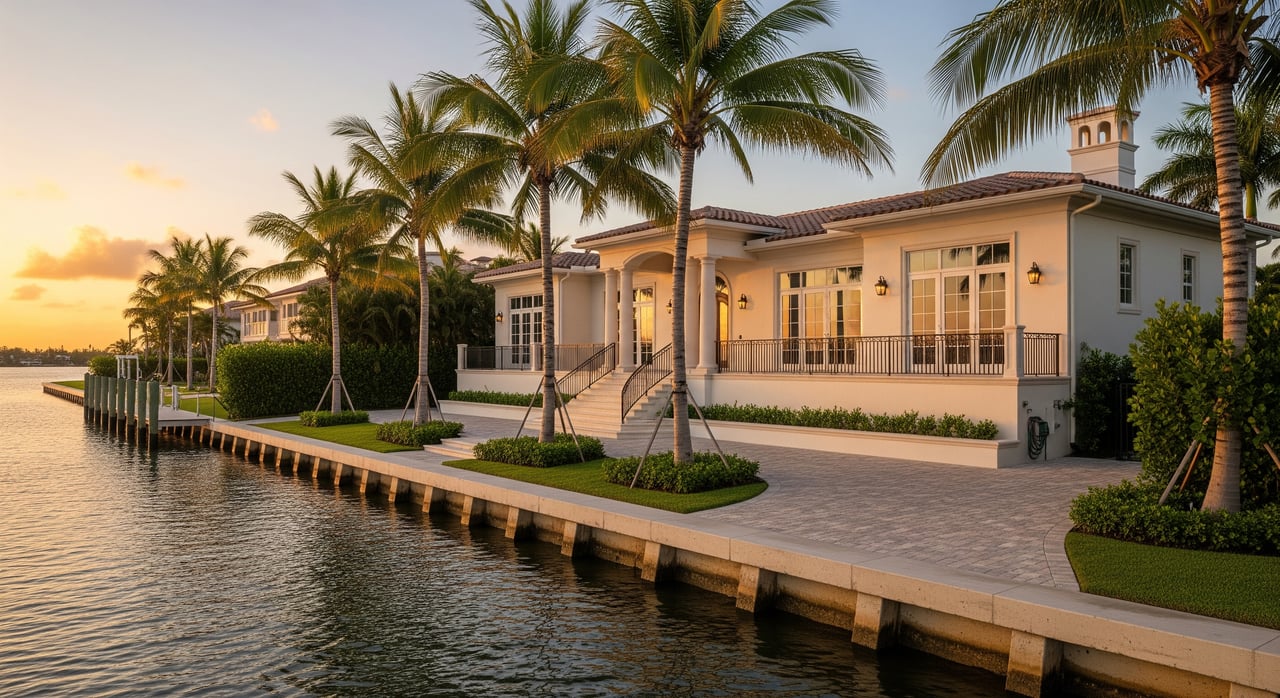
Is your Palm Beach Island home ready for the next king tide or fast-moving rain event? You chose this lifestyle for the water and sunshine, and you want to protect both your peace of mind and your property’s value. In this guide, you’ll learn flood‑smart upgrades that work on Palm Beach, how permitting and insurance affect your choices, and a simple plan to move forward with confidence. Let’s dive in.
Palm Beach flood risk at a glance
Sea levels in Southeast Florida are projected to rise about 10 to 17 inches by 2040, which increases tidal and storm-related flooding pressure across the barrier island. The region plans around the Compact’s unified projection, so you can expect local policies and projects to reflect this outlook. The Southeast Florida Regional Climate Change Compact’s projection is the foundation.
FEMA also updated flood maps countywide in late 2024. If you have not checked your address recently, review your current flood zone and base flood elevation using the FEMA Map Service Center. Your zone and elevation will shape the best upgrades and your insurance options.
Permits, zones, and insurance basics
Understand your zone and elevation
Your strategy depends on your flood zone and your home’s lowest floor elevation. Palm Beach County’s rules include higher standards, like at least 1 foot of freeboard above the base flood elevation in many areas. Review the County’s adopted standards in ULDC Article 18 and confirm details with local building officials.
What you can and cannot floodproof
Dry floodproofing is not allowed in Coastal High Hazard (V/VE) zones for NFIP compliance. In these areas, elevation on open foundations and wet‑floodproofed enclosures are typical solutions. See FEMA’s summary of floodproofing approaches and limits in the FEMA floodproofing guidance.
Insurance factors to consider
FEMA’s Risk Rating 2.0 ties NFIP pricing to your property’s unique risk and mitigation features. Elevation, distance to water, and the cost to rebuild can all factor into your premium, so mitigation can pay off but savings vary by home. Learn how pricing works in FEMA’s Risk Rating 2.0 overview, and note the Town of Palm Beach’s Community Rating System Class 6 status, which provides a 20% discount on eligible NFIP policies as listed on the Town’s flood information page.
High‑impact flood‑smart upgrades for island homes
Elevate living space or key systems
Raising your lowest habitable floor above the design flood elevation offers the greatest long‑term risk reduction and can meaningfully affect insurance and marketability. If full elevation is not feasible, elevate critical equipment like HVAC, electrical panels, and water heaters to or above the design flood elevation. See FEMA’s overview of elevation options in the FEMA guidance on elevating homes.
Add flood openings and durable finishes
In enclosed areas below an elevated living floor, install automatic flood openings to equalize water pressure and reduce structural stress. Finish spaces below the design flood elevation with flood‑damage‑resistant materials such as tile, concrete, and closed‑cell insulation. Use wet‑floodproofing only for non‑habitable areas and follow NFIP rules outlined in FEMA’s floodproofing guidance.
Raise and protect utilities and fuel
Move electrical panels, breakers, HVAC units, gas meters, and water heaters to upper levels or elevate them on platforms above the design flood elevation. Secure and anchor fuel tanks to prevent flotation and rupture. FEMA’s training materials outline practical retrofit steps for utilities and mechanicals; review the concepts in this FEMA utilities and equipment guide.
Shoreline and seawall strategy
Seawalls and bulkheads can reduce wave-driven erosion, while living shoreline elements can add stability and ecological benefits in suitable areas. Oceanfront work and most projects near the water come with added permitting. If your property is seaward of the Coastal Construction Control Line, coordinate early with Florida DEP; start with the CCCL program page.
Manage water on site
Use grading that directs runoff away from the structure and toward appropriate drainage. Consider permeable pavers, rain gardens, and sump systems to relieve short-duration ponding. Add backflow prevention devices and check valves where allowed to protect against wastewater or stormwater backup.
Protect entries and garages
For nuisance tidal flooding or short-notice storms, flood shields or removable panels at doors and garages can be a practical layer of protection. Verify product ratings and confirm what is permitted locally before you buy.
Budget and ROI: what to expect
Whole‑home elevation costs vary widely with foundation type, height, size, and proximity to water. Consumer guides commonly cite a range of about $20,000 to $150,000+ for single‑family lifts, with island conditions often pushing costs higher; get a structural engineer’s assessment and multiple local bids. For context, see this national overview of house‑lifting costs.
Lower‑cost retrofits like flood vents, equipment elevation, and flood‑resistant finishes often deliver strong risk reduction per dollar. Insurance savings are property‑specific under Risk Rating 2.0, but elevating the lowest floor and meeting local freeboard can improve quotes. Eligible NFIP policies in the Town also receive the 20% CRS discount when applicable.
A smooth process: your Palm Beach checklist
- Confirm your current flood zone and base flood elevation; keep a copy of any Elevation Certificate.
- Document existing conditions: photos of utility locations, seawall or bulkhead condition, and any past mitigation.
- Choose a target design flood elevation with your engineer before designing finishes or cabinetry.
- Speak with Town of Palm Beach Planning, Zoning & Building about permits and substantial‑improvement thresholds.
- If oceanfront or near the beach, verify CCCL location and DEP permit needs early in the process.
- Ask your insurance agent for before‑and‑after quotes based on proposed mitigation so you can weigh ROI.
- Keep permits, warranties, and elevation documentation organized to share with buyers at resale.
Ready to protect value and elevate your island lifestyle? If you want a design‑led plan for flood‑smart improvements before you sell, or you’re buying and need a practical upgrade roadmap, reach out to Denise Starrantino for concierge guidance and vetted local resources.
FAQs
How do you check a Palm Beach home’s flood zone and elevation?
- Use FEMA’s Map Service Center to look up your address, review your current panel and base flood elevation, and request any existing Elevation Certificate from the seller or Town.
In Palm Beach V zones, can you rely on dry floodproofing instead of elevating?
- No. NFIP does not allow dry floodproofing for residential structures in V/VE zones; elevation with open foundations and wet‑proofed enclosures is typically required for compliance.
Which upgrades most often lower flood insurance for island homes?
- Elevating the lowest floor above the base flood elevation (plus local freeboard), raising utilities, and adding compliant flood openings can help; exact savings vary under Risk Rating 2.0, and Town CRS discounts may apply.
Do oceanfront projects need extra permits on Palm Beach Island?
- Yes. Work seaward of the Coastal Construction Control Line generally requires Florida DEP approvals in addition to Town permits, so coordinate early.
What should you ask a seller about flood mitigation before buying on Palm Beach Island?
- Request the flood zone/map panel, any Elevation Certificate, records of flooding or claims, seawall or bulkhead condition and permits, mitigation work and warranties, and the elevations of utilities and any backflow or sump systems.
